
Music Artists Suck at Content...
Many music artists suck at making “content.”
And likely, the more seriously you take your music, the worse you might be at “content.”
But why?
You’re creative. You know how to communicate emotion. You can spend six hours obsessing over eight bars of a song. So why does making a 30-second video sometimes feel so painful?
Well, first and foremost: You’re not supposed to be good at “content.” You’re a music artist. Not an influencer, a marketer or a social media analyst. You spent your life getting good at making music. Period.
And with that life comes all of this:
Having to be vulnerable and emotional much more than the average person. Your soul is constantly on display for the world to see.
Being ignored for years.
Giving up huge pieces of your social life because you need that time to make music.
Having relationships that have to work around your life as a music maker and performer.
Staying up late working on music and staying out late playing shows.
Becoming so critical of your own music that sometimes that critical eye starts bleeding into everything else you make.
Sacrificing time, money and effort for years without knowing whether any of it is going to work.
Sacrifice. Sacrifice. Sacrifice.
And then, after doing all of that, someone comes along and says:
“Cool. Now make three TikToks today.”
Your creative brain says, no thank you.
Meanwhile, you see artists whose music is arguably the same or maybe even worse than yours crushing online, building audiences and getting opportunities you want simply because their content is working.
What do they know that you don’t?
Actually probably a lot… but the good news is I’m going to unveil what they are doing, how they approach it, and how you can do it too. And this is isn’t some gatekeeping, “buy my course,” or “become a paid subscriber in my network” type thing. I’m going to give you the direct methods to get exponentially better at making content based on my experiences of 20 years working across the marketing, branding, content and live-show side of some of the largest music artists in the world.
And stick with me until the end because one of the biggest shifts has nothing to do with posting more, learning algorithms, getting better on camera or becoming a data analyst. But to kick it off your biggest issue may have nothing to do with technique and it may have everything to do with your approach…

ONE PROBLEM MIGHT BE HOW YOU’RE FRAMING CONTENT
Most artists put music in one category and content in another. Music is art. Content is marketing. Music is meaningful. Content is promotional. Music is what I actually want to make. Content is what I have to make so people eventually discover the thing I actually care about.
That framing immediately makes content feel like homework. Music comes first because, although making music can be incredibly hard, you love most of the process. Content comes second because someone, like me, told you that you need to feed the algorithm and without it nothing will happen for your project.
But what happens if we change the definition?
For the rest of this article, forget the word content. Let’s call it art. Even if we use it re-read it and change it to “art” instead. Another form of expression that exists around your music.
A photograph can be art. A short film can be art. A joke can be art. A bizarre recurring character living inside your world can be art. An interview can be art. A tour diary can be art. A three-minute documentary can be art. A conversation between you and another artist can be art. A performance is art.
Suddenly the question changes. Instead of asking, “What content should I post?” you start asking, “What else could I make that goes with the music?”
Totally different question that ignites a totally different response from the brain.
That’s a much more interesting creative problem. And once you start thinking that way, getting better becomes much easier, because the exact process you used to get good at music can also make you good at this.
METHOD 1: HONE YOUR TASTE
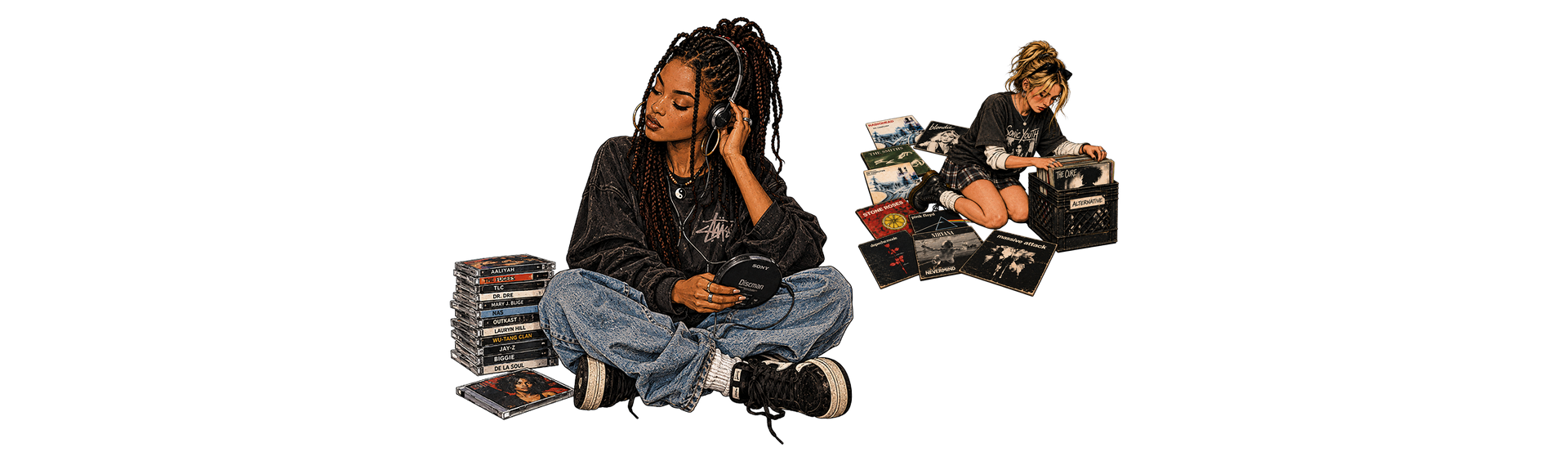
How did you get good at music? Think about it. You listened to thousands of songs. You found artists you loved. You figured out what you hated. You stole little ideas from everywhere. Not literally copying songs, but absorbing techniques. A drum sound from one artist, a structure from another, a vocal treatment, an attitude, a tempo, a chord progression, a way of arranging tension.
Eventually, all of those references passed through your personal taste and became something new. Then you practiced, and practiced, and practiced.
Content works exactly the same way.
One of the biggest problems I see is artists attempting to create content without ever seriously studying it. They’ll spend eight hours watching production tutorials about compression ratios and then give approximately four seconds of thought to why a video they watched yesterday kept their attention for six minutes.
You study music. Why wouldn’t you study other forms of art?
And more importantly, study outside of music. If you’re a DJ / Producer and the only content you study comes from other DJs Producers, eventually you’re going to create the exact same content everybody else makes: DJ booth clip, festival recap, track breakdown, studio shot, airport, hotel, crowd, repeat.
Instead, study filmmakers, fashion brands, comedians, athletes, YouTubers, photographers, documentaries, advertising, reality television, streetwear brands, old MTV, magazine editorials, movie trailers, talk shows, wrestling, skate videos, whatever holds your attention.
And when something does hold your attention, stop and ask why. Why did I watch the entire video? Why did that opening make me curious? Why did that photograph feel expensive? Why did that person immediately seem interesting? Why did I share that? Why did I send it to someone? Why did I remember it the next day?
That is content education.
Start building references the same way you built musical references. Eventually you begin developing taste. And taste might be the most important skill in all of this because once you know what good looks like, you have something to aim at.

METHOD 2: LEARN TO NOTICE STORIES
Great content is very often just great storytelling disguised as something else. The problem is that when artists hear the word storytelling, they usually assume they need some giant cinematic documentary or a 800 page book about overcoming adversity.
You don’t.
Story is everywhere. Someone told you your record moved them. That’s a story. You missed your flight on the way to a show. Story. A promoter accidentally booked you into a 500-cap club when your team thought it was 2,000. Whoops. Story. You found the synth used on one of your favorite records. Story. You haven’t played your hometown in six years. Story. You spent $3,000 fixing one tiny part of your live show, but now decided not to use. Story.
Most artists already have stories. They’re just bad at recognizing them.
You need to start noticing tension, because tension is what creates a reason to keep paying attention. There is a huge difference between saying, “Come with me to my show tonight,” and saying, “Tonight I’m playing the smallest show I’ve played in five years, on purpose.”
One is documentation. The other creates a question.
Why? What happened? Why would you do that?
That gap between what someone knows and what they want to know next is where stories live.
And stories are transactional. People give you their attention and you give them something in return. Maybe they laugh. Maybe they learn something. Maybe they feel inspired. Maybe they feel tension. Maybe they’re surprised. Maybe they see themselves inside the story.
But there has to be an exchange.
People were entertained, interested or given value, or they weren’t. Your followers don’t owe you attention because your music is good. Every piece has to earn it.

METHOD 3: LEARN HOW TO TELL THE STORY
Noticing stories is one skill. Telling them is another.
Musicians understand this instinctively in music, but not in content.
But artists do this constantly in videos.
The beginning is often the most important part. Start closer to the interesting moment. Create a question. Create curiousity to hear more. Create contrast. Create stakes. You don’t necessarily need to scream at the camera or use some ridiculous clickbait hook. You just need to give someone a reason to lean in… want the next sentence, then the next, then the next. Wether it’s dinner with friends or around a tribal camp fire humans have been telling each other stories for centuries. Some are memorable and some aren’t…
Starting with “So my latest single was made in Chicago about 4 months ago in a recording studio outside the city.”
Vs.
“The first time I knew something was really wrong I was standing in front of 300 people drenched in sweat…”
Great stories also change. Something needs to happen. The best stories have some kind of transformation. You wanted something and something got in the way. You discovered something. Something went wrong. Something unexpectedly went right. You changed your mind. You learned something. You failed. You succeeded. You were surprised.
Even incredibly small content can contain a beginning, middle and end.
Start watching for that structure. Eventually, you will begin naturally seeing stories everywhere. It’s like how radio music sounds totally different to you now because you know how it’s made. You aren’t listening to it fully. You are picking it apart.

METHOD 4: IF YOU DON’T LIKE IT, THEY PROBABLY WON’T EITHER
This might sound obvious, but artists violate this rule constantly. They make content they personally hate because they’ve been told it performs. “I need to promote my new song somehow.”
So then it’s point at these words. Film this trend. Use this format. Don’t forget you need a hook!
And sometimes it works.
But here’s the problem: if your audience likes the content and you hate making it, you have created a successful version of something you don’t want to continue. Not a win.
Congratulations. You built yourself another job. A prison of your own design.
Instead, dig / research until you find formats you genuinely think are cool. This doesn’t mean every piece has to be some gigantic artistic masterpiece. It means you should be able to look at what you made and say, “I would watch this,” or “I think this is funny,” or “This actually feels like me.”
There are nearly infinite formats available to you. Maybe you’re naturally funny. Maybe you’re incredibly analytical. Maybe you’re obsessive about production. Maybe you love fashion. Maybe you’re introverted but fantastic in long conversations. Maybe you’re terrible talking to camera but incredible at making visual films. Maybe you’re great at interviewing other people. Maybe you’re naturally controversial. Maybe your entire appeal is mystery and saying almost nothing.
Stop forcing yourself into somebody else’s definition of content.
Just like music… find stuff you like, things you are inspired by and make your version of that. Just like music…if you like it, share it.

METHOD 5: BUILD REPEATABLE FORMATS
Great artists should not wake up every morning asking, “What should I post today?”
That’s exhausting.
Imagine if Netflix had no shows. Every morning the executives walk into the office and say, “Fuck. What should we put on Netflix today?”
No.
They build shows. Formats. Containers. Then ideas go inside those containers.
Artists should do the same.
Develop three to five recognizable content formats that fit your personality and world. Maybe one format is breaking down production techniques. One is mini documentaries from tour. One is conversations with other producers. One is absurd comedy. One is a beautifully filmed performance series.
Now you’re not constantly inventing a new sport. You’re practicing the same sport repeatedly.
And repetition creates skill.
Think about any YouTuber you love. Any great interviewer. Any great comedian. Any filmmaker. Any photographer. They often repeat underlying structures. They just change the subject.
That’s why formats are so powerful.
They remove the pressure of starting from zero. Instead of asking, “What should I make?” you ask, “What’s this week’s episode?”
Massive difference.

METHOD 6 REWORK HOW YOU VIEW PERFECTION
This is where artists can become their own worst enemy.
Musicians are trained to obsess. The wrong kick drum can ruin your afternoon. A mix revision can ruin your weekend. That obsessive attention can create great music, but applied to content too early, it can completely kill your output.
Your first 20 videos might suck. That’s fine. Your first interviews might feel awkward. Your editing might be bad. Your storytelling might be clunky. Your camera angle might feel off. Your ideas might not connect.
Good.
You’re practicing.
Nobody walks into a studio for the first time and expects to make a Grammy-winning record. Yet musicians will post six videos, see mediocre results and decide, “Content doesn’t work for me.” “I hate Content.”
Imagine producing music six times and quitting.
Getting better requires volume. Not infinite meaningless posting, but enough repetitions to recognize patterns.
Make something you like. Release. Learn. Repeat.
METHOD 7: REVIEW THE TAPE
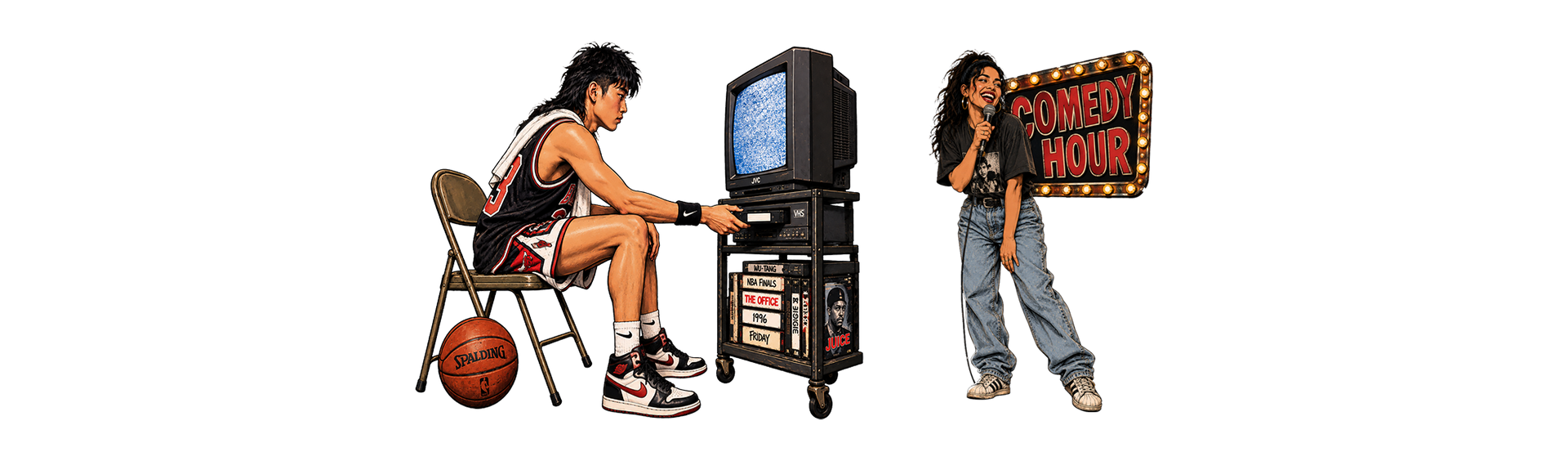
Athletes watch game footage. Musicians listen back to mixes. Artists stare at paintings from across the room. But a lot of musicians post content and then either completely ignore the results or obsessively stare at views without actually learning anything.
Neither is useful.
Every 10 to 20 pieces, review the tape.
What happened? Where did people leave? What got shared? What generated comments? Which opening worked? Which thumbnail worked? What subject got attention? What felt forced? What felt effortless? Which video surprised you? Which video did you love that nobody else cared about? Which video did you barely think about that somehow exploded?
Don’t just ask, “Did this perform?”
Ask, “Why did this resonate with other people?” “Why might they also like this thing I like?”
Then make the next batch.
This is how intuition gets built.
After enough repetitions, you’ll start recognizing patterns before you even post.
That is skill.
Good comedians can make people laugh whenever they want. Not because they were simply born funny, but because they’ve run thousands of tiny experiments over the years trying ideas, watching reactions, and learning what actually lands. When something makes them laugh and makes the room laugh too, they remember it. They keep it in their back pocket and build on it.
Chris (Your Brand Therapist note):
ENGAGEMENT NUMBERS DO NOT MEAN THE THING YOU MADE IS GOOD OR BAD OR THAT YOU ARE GOOD OR BAD.
Those numbers just show if it resonated with the people it was shown to.

METHOD 8: TREAT CONTENT LIKE ANOTHER CREATIVE DISCIPLINE
This is ultimately the entire point.
Stop asking yourself to become an influencer. You probably don’t want to be one.
Instead, become an artist who knows how to communicate through more than one medium.
Music is one medium. Photography is another. Film is another. Storytelling is another. Writing is another. Live performance is another. Design is another. Comedy is another.
Content (Art) is simply the internet’s lame messy umbrella term for all of it.
And just like music, you don’t become great overnight. You build taste. You study. You steal techniques from your heroes and artists you respect. You experiment. You learn. You develop formats. You make bad work. You learn. You occasionally make something surprisingly good. You study the why. Then you do it again. You learn.
And eventually something important happens.
Content stops feeling like the annoying thing you have to make to market your music.
It becomes another extension of the reason you became an artist in the first place: you had something inside of you that you wanted other people to experience. Something to express.
The music is still the center. It should be.
But maybe the job isn’t to become better at “content.”
Maybe it’s simply to get better at finding more ways to express the world your music already lives inside.
And artists already know how to learn that.
You’ve been doing it your entire life.

Need help with your brand? Want to work directly with us?
Contact us at
See services and pricing here: