

What the F*ck to Actually Post for Content as a Music Artist (You're doing too Much)...
Many music artists are asking the wrong question.
They ask, “What should I post for content?” Should I make a vlog? Should I post a studio clip? Should I talk directly to camera?
Should I make something funny or post more photos? Should I be more authentic?
But most artists don’t actually have an idea problem. They have a story problem. There is no larger story helping them decide which ideas make sense and which ones do not.
A random post with no context behind it is like watching a quick scene from a movie you’ve never seen and trying to figure out what’s happening. The brain subconsciously asks: What is the movie? Who is the character? What do they want? What’s the story? Do I care?
These questions are being asked in a split second.
Content, which we look at as communication, works the same way. Artists often judge every post on its own. They look at a video, photo, caption, or graphic and just purely look at if they think “it’s cool.”
But one post is not supposed to carry the full weight of the artist brand. It is supposed to be one scene inside a much larger movie.
When you understand the movie, the scenes become much easier to make.
The Problem Is Often Not the Music
The modern problem for most artists is no longer simply, “How do I make good music?”
Of course the music has to be good. But we are living in a world where roughly 100,000 songs are uploaded every day. There is more music, more content, more artists, more noise, more AI slop, and more competition for attention than ever before.
The deeper question is: How do people find you? How do they understand you? How do they know what you stand for? How do they recognize your world? How do they care enough to stick around?
This is where brand, story, and communication become part of the same conversation.
The artists who are growing aren’t throwing random content at the wall and hoping something works. They understand the world they are building. They know the story, the character, the current era and chapter, what they are trying to bring awareness to, and which styles of communication belong inside that world.
Then they execute consistently.
So how do you figure out what you should actually post?
First, you zoom out. Then you work your way back down.
Start With the Movie
The first layer is the movie.
The movie is the full artist brand. It is the story the audience is watching, the character you are playing, and the world people enter when they listen to your music, watch your visuals, attend your shows, buy your merch, or follow you online.
When people connect with an artist, they are not only connecting with sound. They are connecting with a feeling, a worldview, a character, a belief system, and a point of view.
Just like a movie, an artist’s story is built from many different elements and choices working together. When it is done well, the audience becomes immersed in the world without noticing all the individual pieces creating the feeling.
Sometimes that story is explained directly. Most of the time, it is felt subconsciously.
It is in the way you dress, the way you speak, the things you show, the things you keep private, the colors you use, the locations you choose, the stories you repeat, the enemies you fight, and the kind of people you make feel seen.
This is why we call the brand “The Movie.”
The music is part of the movie. Every great movie needs a great soundtrack. But the soundtrack is not the entire experience.
If you do not know the larger story, your content will always feel random because there is nothing helping you decide what belongs and what does not.
This is why two artists can use the exact same format and get completely different results. One artist makes a day-in-the-studio vlog and it feels natural. Another does the same thing and it feels forced. One artist talks directly to camera and it connects. Another feels like they are pretending to be an influencer.
The format is not the problem. The lack of alignment is the problem.
Before you figure out the content, you have to know the movie. Who is the main character? What do they want? What do they believe? What does success mean to them? What does their world feel like? Who are they trying to connect with? What should the audience feel?
Once you understand that, the next layer is the era.
Define the Current Era
Artists often worry that defining their brand means getting trapped inside it forever. But great artists have always evolved through different periods.
Kanye had The College Dropout, 808s & Heartbreak, Yeezus, and The Life of Pablo. The Beatles had their early pop period and later moved into a psychedelic world. Picasso had his Blue Period, Rose Period, and Cubism period.
The artist remains. The overarching movie remains. But the era changes.
The era is the current version of the story. It is where you are emotionally, creatively, visually, and philosophically right now.
What are you interested in? What are you wrestling with? What are you trying to express? What sounds keep showing up? What images keep pulling you in? What does this moment of your life feel like?
Expressing this in real time is what art is all about, and an era gives the artist a sandbox.
Defining it matters because unlimited options are not always freeing. When everything is possible, it becomes harder to know what to make. Positive constraints make the creative process easier.
If you are in a darker and more introspective period, certain ideas naturally fit. If you are in a chapter about freedom, movement, rebellion, or reinvention, different ideas show up.
The era gives shape to the world. It does not mean you can never step outside of it. It simply creates cohesion around what you are doing right now.
Once the era is clear, the next layer is the campaign.
Build a Campaign
A campaign is the smaller story you create around something new: a song, album, tour, show, merch release, or project.
A campaign is not a list of posts saying, “My song is out Friday.”
That is the same announcement repeated several times.
A real campaign creates a world around the thing you are trying to bring awareness to. There is an organizing controlling lens that everything runs through.
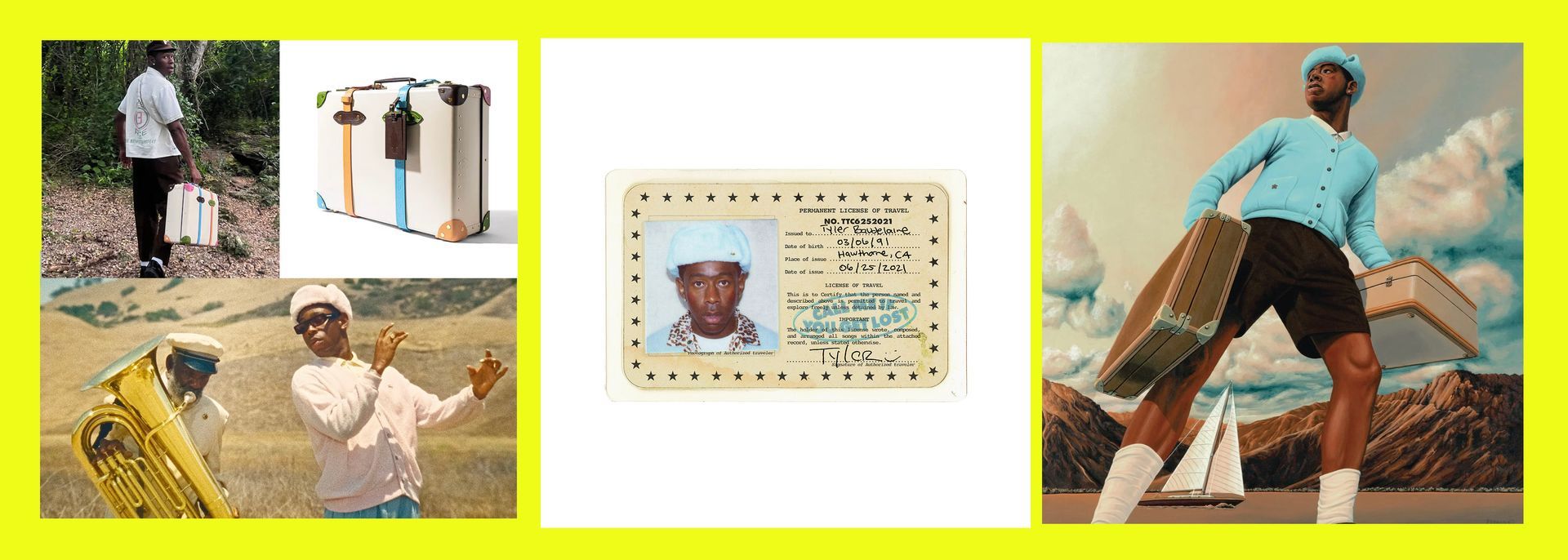
Look at Tyler, the Creator’s launch for Call Me If You Get Lost. The project was rooted in travel, luxury escapism, mixtape culture, and a specific character. There were mysterious billboards, passport-style graphics, custom luggage, travel documents, and cinematic teasers.
He did not simply release an album. He made the audience feel like they were boarding a trip into another world.
And yes, Tyler had a major budget. But the principle is not about money. It is about intention.
The horror movie Smile used a simpler idea. The marketing team placed people with creepy smiles in highly visible public places. People photographed them, the images spread, and the marketing became part of the conversation around the film.
That is the job of marketing: How do we make more people aware that this exists in a way that also strengthens the story?
When building a campaign, ask what you are bringing awareness to, what the concept is, what themes belong to it, what the world looks and feels like, and how it connects to the era and larger movie.
Once you know the campaign, you can create content buckets.
Create Content Buckets
Content buckets are broad categories that give you repeatable places to pull ideas from.
Imagine an Explorer artist releasing an album created across multiple countries. The larger story is about movement, discovery, and adventure.
The content buckets could include travel stories, food, strange places, cultural experiences, collaboration, performances in unusual locations, or moments from making the music.
The audience begins following the artist like they would follow a travel show. Where are they going next? What will they discover? Who will they meet?
Now imagine a Rebel artist releasing a DIY, high-energy mixtape. The visuals feel underground, the sound is aggressive, and the campaign is about independence, resistance, and breaking out of a system.
The content buckets could include underdog stories, anti-industry statements, underground performances, DIY creation, pop-up shows, or moments that express freedom.
Now the artist has a content sandbox. They are no longer sitting in front of a blank screen asking what to post.
That is the value of content buckets. They turn one campaign concept into dozens of possible ideas.
But once you know the bucket, you still need to decide the format.
The Format Is Not the Strategy
A format is simply the way the idea is presented.
A vlog is a format. A yap video is a format. A blind reaction is a format. A cinematic music video is a format. A studio breakdown is a format. A recurring comedy bit is a format.
The mistake artists make is seeing a format work for someone else and assuming the format itself is the strategy.
It isn’t.
The format is the container. The story is what fills it.
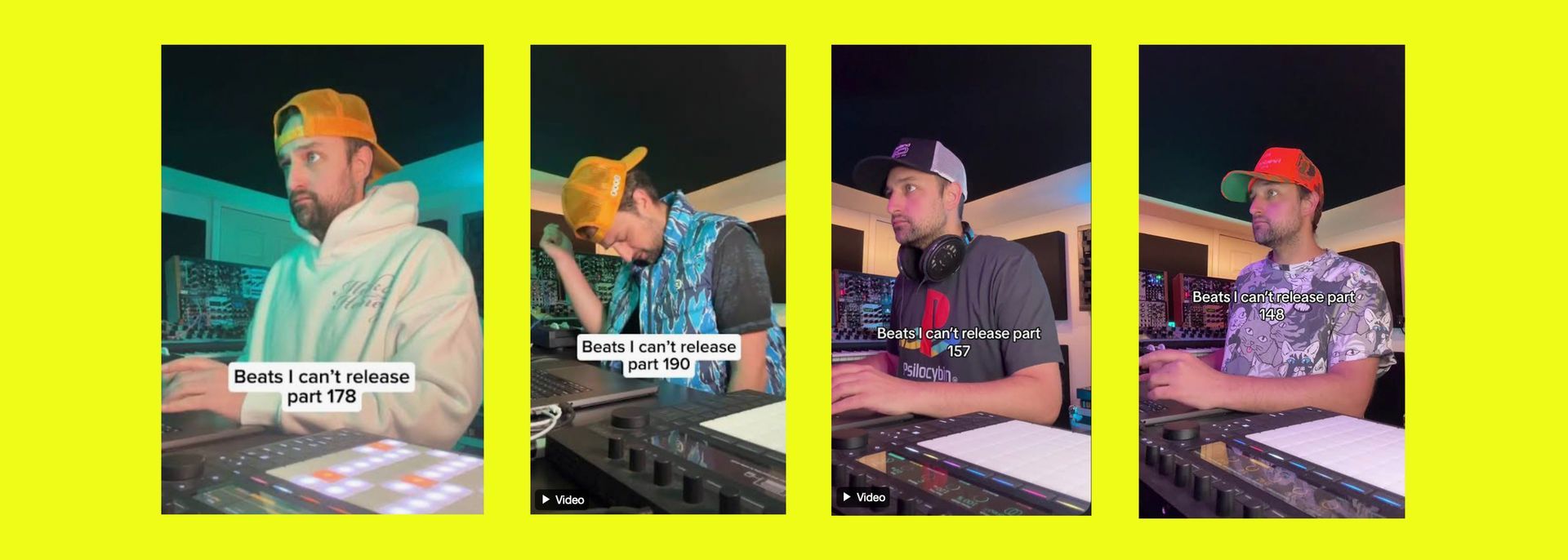
One of our clients, Wuki, found a format during lockdown that changed his career. He played two versions of himself. One sat at a desk making a bootleg remix. The other walked past the studio, heard the track, and reacted.
The headline was “Beats I Can’t Release.”
The post went viral, so he did it again. Then again. What began as one post became a repeatable content property. From what I understand, he has now done close to 200 versions.
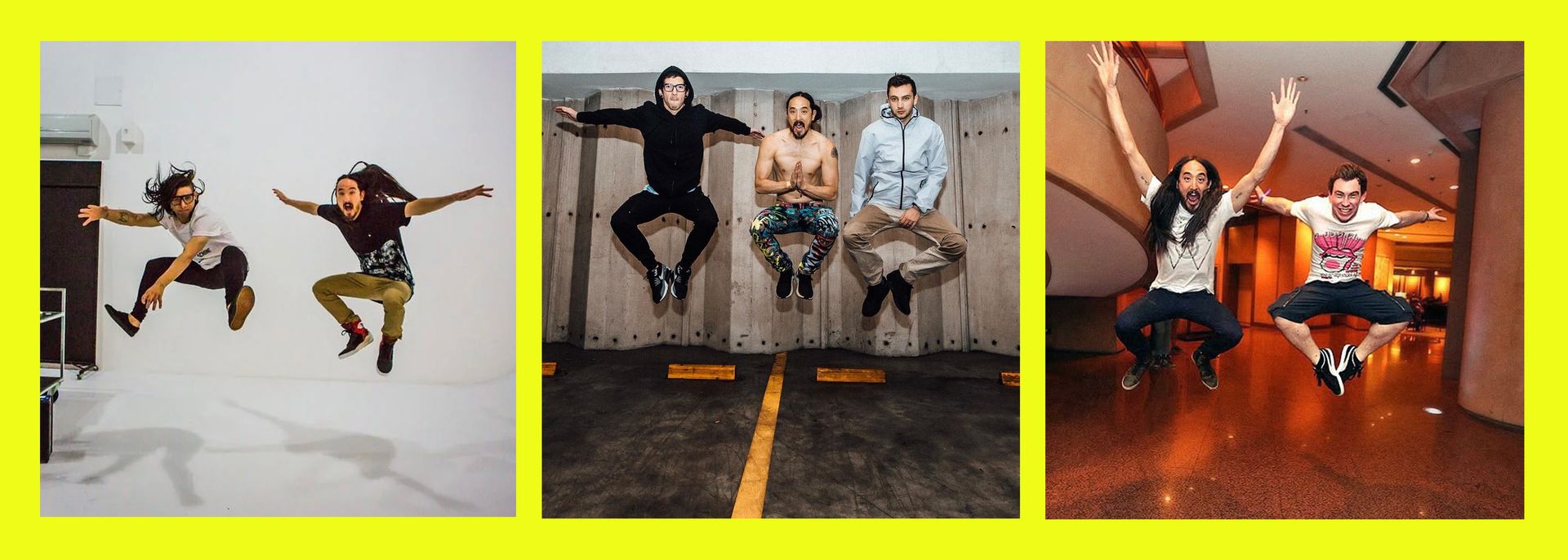
Steve Aoki’s jump photos were another version of this. He took photos jumping in iconic locations around the world, then with other DJs, celebrities, and public figures.
His brand was about world travel and high-octane energy. The photos communicated both.
Not every post has to become a series. But artists should experiment until they discover repeatable styles that feel aligned with the brand and recognizable to the audience.
The strongest artists usually have a healthy mix: campaign content tied to the current release, ongoing properties tied to the larger brand, and one-off posts that still strengthen the world.
Go Deep, Not Wide
The next layer is the platform.
What are the best platforms?
That can only be answered by the artist and what makes sense for them. But unless you are already a mainstage artist with a large team, it is often better to go deep than wide.
Where are your people spending time? Which platform supports the way you naturally communicate?
A younger audience may spend time on one group of platforms. An older audience may spend time somewhere else. A highly visual artist may thrive in a different place than an artist whose strength is long-form storytelling.
The platform should fit the audience and the content. The content should also feel native to the platform.
Do not make broccoli.
If you create one piece of content and chop it into smaller pieces, you still have the same broccoli. It is not new. It is just smaller.
Each platform has its own language, pace, audience behavior, and reason people go there. Repurposing can be useful, but the idea still needs to be translated.

A YouTube video chopped into a random vertical clip is not automatically a good TikTok. A polished commercial is not automatically a good Instagram Reel.
Some stories are better suited as movies shown in theaters. Others are better as longer television series watched at home.
Content is no different.
Planning Is the Difference
Once the story, era, campaign, formats, and platforms are defined, the final piece is planning.
This is what separates the rookies from the pros.
If it is on the calendar, it usually gets done.
Artists will spend months making a song and start thinking about the content three days before release. They post the cover, share a flyer, repost someone’s Story, and then wonder why the release did not travel.
Professional artists do not operate this way.
Their teams plan months ahead around songs, albums, tours, shows, merch, and announcements.
You may not have a team yet, but you can still think like a professional.
Start with the major moments. What are you releasing? What shows are happening? What needs to be announced? What footage will exist afterward? What moments are worth documenting?
Put those on the calendar first. Then return to your content buckets and fill the remaining space.
A song release could create ten posts by itself: a teaser, the story behind the song, a studio clip, a visual, a reaction, a performance, a lyric post, a fan response, a behind-the-scenes moment, and a follow-up.
Now you are not inventing content from nothing. You are mapping the story around the song.
The calendar should also have balance. Some posts should deepen the story. Some should bring awareness (post created to go more broad). Some should strengthen the relationship. Some should directly promote the work.
You should not try to go viral every day. But you also should not tell your story so quietly that no one knows you released anything.
The number of times you post depends on the game you want to play. Some artists play a volume game. Others play a quality game.
The important thing is knowing which game you are playing and building your system around it.
What does not work is treating content like an afterthought and expecting professional results.
Larger artists may plan four to six months ahead. Mid-tier artists may plan one or two months ahead. New artists often do not plan at all.
And that difference shows.
The Full System (The Proper Sequence)
So what should you actually post?
Start with the movie. What is the larger story?
Then define the era. What chapter are you in?
Then build the campaign. What are you trying to bring awareness to?
Then create the content buckets. What kinds of stories belong inside this world?
Then choose the formats. How should those stories be presented?
Then choose the platforms. Where are the right people spending time?
Then build the calendar. When will the content get made and published? How does that line up with shows and releases?
Then study the results, not only the views or engagement stats, but the connection.
This is the system:
Movie → Era → Campaign → Content Buckets → Format → Post
The individual post is the final step, not the first.
This is why some artists always seem to know what to create. They are not magically more inspired. They understand the world they are operating inside. They built the foundation first.
When you know the movie, you can keep finding new scenes. When you know the character, you know how they would respond.
When you know the era, you know what the scene should look like. When you know the campaign, you know what the scene needs to accomplish.
When all of these elements connect, content stops feeling like random marketing.
It becomes storytelling.
It becomes communication.
It becomes part of the art.
The goal is not to make more content just to feed the algorithm. The goal is to create a connected world where every post gives people another reason to understand you, care about you, and step deeper into the story.
Do not begin with the post.
Begin with the movie.
Should you need help defining any of this for your own brand, you can collaborate with us at thecultcreatives.com. We specialize in brand building, brand foundational story elements, brand strategy, campaign strategy, production, and brand vision sessions
where we help artists flesh these items out.
We help artists bring their movie to life.
Need help with your brand? Want to work directly with us?
Contact us at
See services and pricing here:
