
What the F*ck to Actually Post for Content as a Music Artist (Use Nostalgia)...
There’s something that’s happening right now in terms of content for Music Artists and it’s def something worth showing you…
There’s certain music artists that are having great success building and growing their audiences and there’s one main move / tactic that is actually driving the majority of their growth… That you can absolutely steal…
When I speak with most music artists the number issue they say they have is with content. Just knowing what the f*ck to post… But what if content could be as easy as following an old simple playbook? And not just any playbook, but a playbook that you personally already love and are 100% aligned to as an artist…
Instead of trying to jump on the latest trends on whatever social platform what if that playbook was based in simply referencing old things?
This is where the concept of nostalgia comes into play. Nostalgia isn’t powerful because old things are automatically cool. There’s actually real science behind why it works. Memories themselves are tied to the emotions within them. Ask someone to tell a story about a memorable moment and they may break out in laughter while explaining it, they may burst into tears, their tone can change as well as their body language. All of this can happen with a memory because although it’s from the past the brain interprets it as happening again. They are reliving the moment. So when you use nostalgia in branding and content you are triggering more than just familiarity you are engaging emotions buried deep within mind the consumer.
As artists part of our creative lives is to move our own emotions to our respective mediums so we can share them with others so they can feel too. Evoking emotions is our job. And with nostalgia artists have something incredibly valuable: a shortcut to emotional connection. In this article, I’m going to show you how artists can use nostalgia and referencing not as a cheap retro gimmick, but as an actual creative framework for building an entire content strategy.
Here’s how we think about using nostalgia when we are building brands with our creative agency The Cult Creatives …
Now, for many of the brands we build, we usually hone in on a specific era when we’re thinking about the story we’re trying to tell. What era are we living in? What era are we referencing as we build this world? Is it the 1980s? The 1950s? Y2K? The early 2000s?
We’ve found that choosing an era gives you a really simple place to start. Pick a time period that already connects to the artist and the music. Maybe it’s the 1980s, the 1990s, Y2K, or the early 2000s. Then start looking at that era for creative clues. What colors were everywhere? What were people wearing? What movies, TV shows, magazines, ads, products, technology, and objects defined that time? Instead of starting every piece of content from a blank page, you now have an entire world to pull ideas from.
From there, start building your moodboard around that era and that point of view. Now, the entire moodboard doesn’t have to be made up of references from that era. You can still mix in other things you’re inspired by. But when you’re pulling from that specific time period, try to stay inside the same sandbox. Don’t jump from 1980s punk to 1990s Wall Street to 2000s suburban childhood just because they are all things you are inspired by. Pick your perspective and stay consistent with it. That’s where you start collecting the colors, clothing, photography, typography, objects, environments, movies, graphics, and visual details that feel right for that specific version of the era.
Then start researching content. Look at old content from that era, but also look at modern artists, brands, photographers, filmmakers, and creators who are already referencing the same era in interesting ways. You’re not looking for things to copy. You’re building a library of references that helps you understand how your version of this world could look and feel. If the music is the soundtrack, this process helps you figure out what movie should be playing alongside it.
The sequence is really simple:
Choose an Era → Choose a Lens → Build the Moodboard → Research the Content
But as you are looking at the different era’s there’s some things to keep in mind…
1990s
Growing up in the 90s felt like living inside this giant cultural mashup. Everything was colorful, slightly weird, and constantly changing. For TV it was Teenage Mutant Ninja Turtles, then Power Rangers, then Pokémon. Nickelodeon was sliming people, orange couches, weird sound effects and shows we loved our Nick shows like Rugrats, Doug, Rocko’s Modern Life, Hey Arnold!, All That, Kenan & Kel, Guts and Legends of the Hidden Temple. And Cartoon Network brought Dexter’s Laboratory and Powerpuff Girls. After school meant Fresh Prince, Boy Meets World, Saved by the Bell or whatever happened to be on. We were wowed by Jurassic Park and early days of CGI. American and Clueless were two different views on high school and for some reason maybe we couldn’t stop watching Fight Club… “His name is Robert Paulson.”
At school suddenly everyone got into trading cards. You carried a Tamagotchi around like it was a real responsibility, watched it die while you were in class, and somehow really felt guilty about it. Pogs briefly became currency… Don’t forget your slammer. Beanie Babies were apparently going to make everybody rich so be sure to collect everyone. We grew up with book fairs and Goosebumps covers were sometimes more memorable than the books themselves. We weren’t scared of scary stories… maybe a little. We had Super Soakers, Nerf guns, Skip-It, Bop It, Koosh balls, Furbies, and those sticky hands from vending machines that collected every piece of dirt in your house within seconds… fun, but gross. Snacks were equally chaotic: Gushers, Fruit by the Foot, Dunkaroos, Warheads, Ring Pops, and Bubble Tape. We drank our Squeezits, and ate our Lunchables and Bagel Bites that somehow came out frozen in the middle and molten lava on the outside.
Music felt huge because you still had to go looking for it. You found bands through MTV, the radio, older siblings, skate videos, movie soundtracks or somebody handing you a CD. Tupac, Biggie, Dr. Dre, Green Day, No Doubt, TLC, Spice Girls, Korn, Rage Against the Machine, Blink-182… but was it okay to buy DMX, Dave Mathews Band, and an NSYNC CD from circuit city at the same time? Or is that weird? We only had so much money and buying an album was a commitment. You opened the jewel case… which took 20 mins to get into, unfolded the booklet, studied the photos, read the lyrics and probably knew every song because you couldn’t instantly skip to something else. Your Discman skipped if you moved too aggressively… actually even if you moved at all.
Video games got serious. Nintendo and Sega felt like rival tribes. At the arcade fighting games started to dominate. Mortal Kombat, Killer Instinct, and Tekken took all our quarters and eventually gave way to PlayStation and Nintendo 64. GoldenEye turned sleepovers into four-player wars where everyone accused everyone else of screen watching… Slappers only? Nah Proximity mines as a go to and your cheating by using Oddjob. Tony Hawk’s Pro Skater introduced us to music we might never have heard otherwise. We rented games for the weekend and had a limited amount of time to figure them out.
The mall was its own ecosystem. You wandered around for hours, tried on sunglasses you weren’t buying, ate food court samples and maybe ended up at that weird kiosk that sold the die shirts and hemp necklaces. Our fashion was all over the place: Starter jackets, giant sports jerseys, overalls with one strap down, Adidas tearaways, chokers, butterfly clips, bucket hats, FUBU, Tommy Hilfiger, Nautica, Airwalk and Vans. We used lemon juice in our hair hoping we’d get that Slim Shady look. Alien heads, flames, smiley faces and yin-yangs could appear on almost anything.
We still roller skated at the rink and went bowling with our friends, but then the internet started creeping in… AOL came on CDs in the mail. We got mail. We got on instant messenger. We blocked our parents incoming calls by being online maybe when we weren’t suppose to. The modem screamed while it connected. Somebody picking up the phone could kick you offline. AIM away messages became tiny public diaries filled with song lyrics, inside jokes and suspiciously specific messages meant for one person.
That’s the part worth remembering when borrowing from the 90s for branding: it wasn’t just baggy clothes and pixel graphics. It was messy, and fragmented. You had to find things, trade things, rent things and wait for things. Culture didn’t arrive perfectly optimized for you, which made discovery feel more personal.
1980s
And as you think about nostalgia and having branding inspired by this era, remember what this time actually felt like…
In the 80s, we grew up on our bikes, maybe you had a Mongoose if you were lucky, with a light on the front, pegs, and one of those little plastic number plates on the handlebars. Your bike was transportation, freedom, and your entire social network. We hung with friends until the streetlights came on. We had JanSport and Eastpack backpacks, a Trapper Keeper covered in weird geometric graphics, freshly sharpened, pencils, and probably some kind of plastic lunchbox… maybe it had a thermos… or maybe it was lost. We had our Saturday morning cartoon lineup which may have featured DuckTales, Inspector Gadget, Voltron, Thundercats, or G.I. Joe. We ate cereal… a lot of cereal… with a lot of sugar and color. Many of these cereals had prizes at the bottom. Wether those prizes were worth it or not is TBD… We drank Kool-Aid, Capri Sun or Hi-C and when we heard the sound of the neighborhood ice cream man it was go time for finding some change in the couch cushions.
Our entertainment was different… more physical. You went to the video store on Friday night and stared at VHS boxes for what felt like an hour. You could only choose one or two so this was a vital decision. The Goonies, The Last Starfighter, Flight of the Navigator, Short Circuit, The NeverEnding Story, Monster Squad, Rad, BMX Bandits, Howard the Duck, Adventures in Babysitting, Pretty in Pink, Labyrinth, or Three Men and baby while the horror aisle terrified you purely from the cover art… Maybe we don’t go back there? MTV actually played music videos, but most our parents wouldn’t less us watch. You recorded songs off the radio onto Maxell tapes and got furious when the DJ talked over the intro. Your yellow Sony Walkman ate those tapes. Your TV had wood grain on it, maybe no remote… probably no remote and when Nintendo finally showed up you blew into cartridges like that was an officially sanctioned repair procedure. Now you need to remember to put a small piece of paper under the cartridge or the game won’t work. Before that there when we were really little Teddy Ruxpin, Lite-Brite, View-Master, Micro Machines, Garbage, Pail Kids, Barbie’s, My Little Pony, Polly Pocket, slap bracelets and those little rubber M.U.S.C.L.E. Men figures that we lineup perfectly on the edge of the bathtub or to then destroy like Godzilla.
And everything looked different. Pizza Hut had stained-glass lamps and red plastic cups. McDonald's had ashtrays and play places that were colorful, cool, and fun, and birthday parties that felt like major tentpole events. The mall smelled like Orange Julius, corndogs and whatever weird chemical fog was coming out of Spencer Gifts. Arcades were dark, loud and slightly dangerous Air Hockey and Skeeball were okay… but Paperboy, Out Run, Gauntlet, Rampage, Double Dragon, and of course Dragon's Lair and a pocket full of quarters could buy you an entire afternoon. You called your friends on a landline and had to survive a conversation with their parents first. You memorized phone numbers. Photos could disappear for months inside an undeveloped roll of Kodak film. There was no algorithm deciding what you should see next, so culture traveled through older brothers and sisters, weird cousins, record stores, magazines, skate shops, cable TV and whatever somebody brought to school Monday morning.
That's the part worth remembering when you're borrowing from the 80s for branding: it wasn't just neon, chrome grids and VHS distortion. It was an era where discovery felt accidental, objects mattered, and the world still had a little mystery left in it.
2000s
Growing up in the early 2000s felt like being the first kids handed the future before anyone really knew what it was going to become. We had SpongeBob, Fairly OddParents, Drake & Josh, Lizzie McGuire, That’s So Raven, Even Stevens, Kim Possible, Teen Titans and Codename: Kids Next Door. We grew up with Harry Potter, Shrek, Spy Kids, Finding Nemo, Monsters, Inc., Lilo & Stitch, The Incredibles, School of Rock and Holes. We loved our DVDs. They had animated menus, deleted scenes, bloopers, bonus features and random Easter eggs hidden somewhere in the menu that made owning the movie feel like real ownership.
Technology was already baked into our childhood. We had Nintendo DS, PlayStation 2 and Xbox, and eventually the Wii. We played Nintendogs, Mario Kart with everyone picking Dry Bones, Pokémon, Kingdom Hearts, Halo, GTA, which our parents definitely did not understand, Smash Bros., COD, Guitar Hero and Rock Band. Guitar Hero may actually have been where some of us discovered our love of music. We had PictoChat, which felt revolutionary even though we were usually messaging someone sitting eight feet away.
Music got tribal fast. Maybe we were into My Chemical Romance, The Used, Linkin Park or Green Day. Maybe we were early on Kanye or completely obsessed with Wayne and Tha Carter III. We still burned CDs, but moved toward MP3s and iPods filled with songs downloaded from LimeWire. On the family computer we played music through Winamp with some insane skin and hoped we didn’t give the computer a Trojan virus.
And somewhere underneath all of that was rave culture. Maybe an older sibling had a Ministry of Sound CD, a Paul Oakenfold mix, Global Underground, DJ Tiësto, Armin van Buuren, The Prodigy, Basement Jaxx, Daft Punk or some badly labeled “TECHNO MIX 2003” file downloaded from LimeWire. We started hearing trance, breaks, drum & bass and electro in racing games, skate videos, clubs, burned mixes and weird internet forums. Flyers covered in chrome fonts, aliens, tribal graphics and impossible-to-read type made parties feel like they were happening in some secret parallel universe. There were glow sticks, kandi, UFO pants, phat pants, cyber goggles, warehouse parties and directions you sometimes didn’t get until the night of the event. Even if you were too young to actually go, rave culture still leaked into everything around us.
The internet itself felt like a bunch of little worlds to explore. Long before Instagram, we had MySpace, and changing your Top 8 could actually create real drama with your real friends. Profile songs mattered. We had AIM screen names, away messages, custom HTML, Club Penguin, Webkinz, RuneScape, random Flash games and early YouTube rabbit holes. Websites still looked homemade because a lot of them basically were. We went into chat rooms we definitely didn’t belong in, and every Christmas we were mostly asking for new computer parts.
Phones and electronics became part of our identity too. We had Nokias, Motorola Razrs, Sidekicks, Nextels that chirped across the room and eventually BlackBerrys that made someone look way more important than they actually were. We texted using T9, paid real money for ringtones and thought a grainy camera-phone picture was insane technology.
And maybe that’s the biggest thing people forget. We were the last kids who had a different device for everything. A gaming system for games. An iPod for music. A point-and-shoot digital camera for photos. A phone that barely did anything. A computer for the internet. A TV for shows.
The part worth remembering is that we grew up digital, but before everything got flattened into one screen. Technology was everywhere, but it still felt individual. We customized our MySpace, our Winamp skin, our AIM profile, our phone, our desktop, our music library and eventually even our online identity. We were half in the real world and half online, and maybe the weirdest part was that everything still felt personal.
2010s
Remember growing up in the 2010s it felt like childhood was suddenly half physical and half online. We still played outside and hung out at friends’ houses, but the second we got home there was an entire digital world waiting for us and that’s where we spent a lot of our time. Gaming was basically part of our social life. Our computer was part of us. We loved gaming and Minecraft, Roblox, Club Penguin, RuneScape, World of Warcraft, The Sims 3, Terraria, Garry’s Mod, Team Fortress 2, League of Legends, and Counter-Strike we part of our normal lives. We built terrible houses, watched Minecraft YouTubers for hours and somehow knew what a Creeper sounded like before it even appeared on screen.
YouTube started becoming our TV. We watched Smosh, PewDiePie, Jenna Marbles, nigahiga, Minecraft channels, prank videos, lyric videos and gaming montages with dubstep or EDM blasting underneath them. We loved manga and Anime and world’s built around fantasy.
We also grew up inside online fandoms. Anime wasn’t some niche thing anymore. We had Naruto, Dragon Ball Z, Attack on Titan, Sword Art Online and whatever series somebody convinced us to binge next. Fantasy worlds felt just as real as anything happening at school. We customized avatars, skins, usernames and profiles because our online identity actually mattered to us.
We were the generation that liked all kinds of music. Pop music, rock music, but EDM was suddenly everywhere too. Avicii, Skrillex, Calvin Harris, Swedish House Mafia, Hardwell, Martin Garrix, Afrojack and Tiësto were the background for high energy moments in our lives. Even if we weren’t old enough to be at Ultra or EDC, we watched the aftermovies, saw the massive stages, heard the tracks in YouTube videos and wanted to be a part of that world.
Technology became normal insanely fast. We can’t remember a time Iphone weren’t a part of the world. We played Temple Run, Angry Birds, Fruit Ninja, Doodle Jump, Subway Surfers and Flappy Bird. We downloaded free apps because asking our parents for 99 cents for the better ones somehow felt like we were asking for a car.
School culture moved almost as fast as the internet. One year everybody had Silly Bandz stacked halfway up their arm, then it was Rainbow Loom bracelets, then bottle flipping, hoverboards, were cool… or were they? Pokémon cards coming back around until it became Pokemon Go adventures. We watched Vine compilations, repeated the same six-second jokes until our parents hated them, and memes started becoming their own language. Half the humor made no sense to anyone outside our age group which honestly made it better.
That’s what made growing up in the 2010s so specific. We were still having a real childhood, but we also lived online. YouTube personalities felt as important as TV stars, they felt like our friend… games became places to socialize, EDM sounded like the future and was our sound, and culture moved fast enough that something could take over your entire school on Monday and feel ancient by Friday.
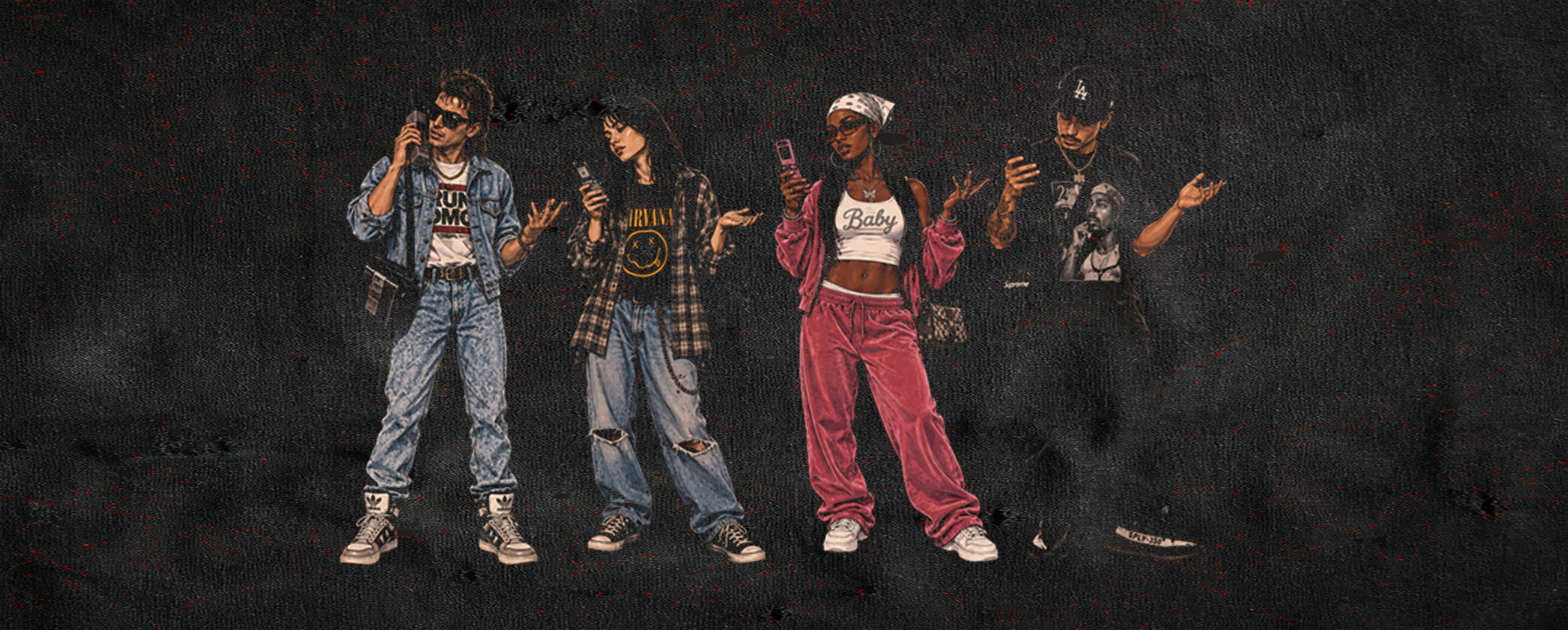
The goal here isn’t to recreate the past perfectly. It’s to understand what made that era feel the way it did, pull out the pieces that actually connect with you, and then reinterpret them through your own music, personality, and story. Nostalgia works best when it feels like a reference, not a costume. So as you start digging through different eras looking for ideas, there are a few things you need to keep in mind so the brand still feels like you and not like some cheap gimmick throwback.
Need help with your brand? Want to work directly with us?
Contact us at
See services and pricing here: